

Balkan Nuevo: Jazz and Folk Fusion at Ljubljana
The Ljubljana Jazz Festival, established in 1953, holds the distinction of being the oldest continuously running jazz festival in Europe, representing more than seven decades of European excellence. This longevity speaks to the festival’s key role in the advancement of jazz as both an art form and a cultural force, particularly within Central Europe. It is within this regional and artistic context that Balkan Nuevo—a musical project pioneered by multi-instrumentalist/composer Goran Bojčevski (BOY-chev-skee)—comes into its own. Their style fuses traditional Balkan melodies and pedal points with the chromaticism and improvisatory nature of jazz, inviting these two worlds to coexist and create a scintillating new sound. Balkan Nuevo’s appearance at the Ljubljana Jazz Festival is more than just a performance. It’s an innovative continuation of the cultural exchange between local traditions and global influences, a dialogue that has been at the heart of the festival’s identity from the very beginning.
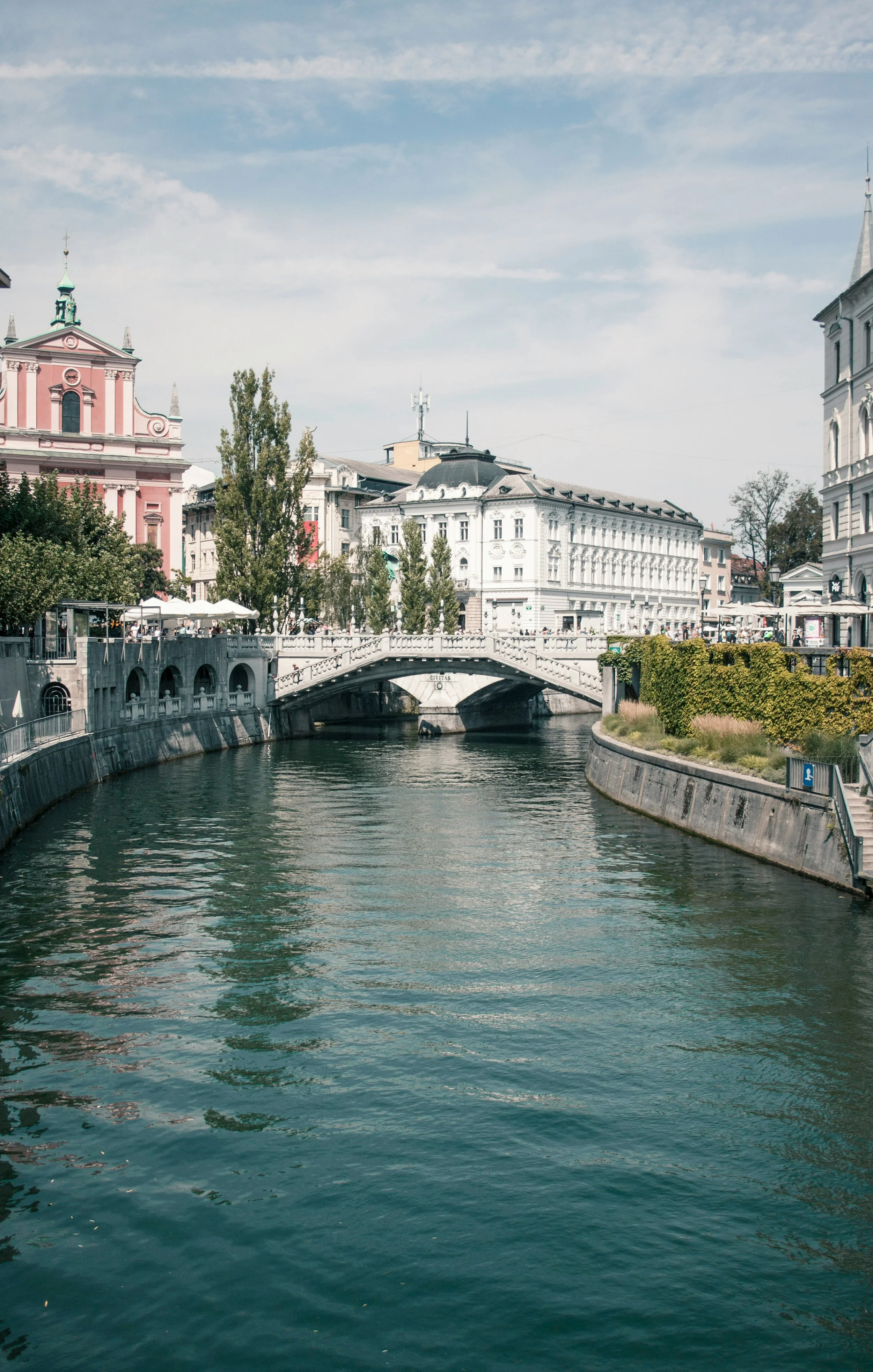
Ljubljana, the capital of Slovenia, holds an important place at the convergence of Germanic, Mediterranean, and Slavic cultural spheres. The city has long been a hub of artistic and intellectual movements; its geographic and cultural positioning has made Ljubljana an ideal host for a festival that promises the fusion of jazz with a variety of European musical styles. Slovenia’s rich musical heritage—encompassing everything from the sacred polyphonic music of Jacob Gallus (1591) to the modernist operatic compositions of Marij Kogoj (1956)—fosters an environment where innovation is both embraced and expected.
Goran Bojčevski, born in Northern Macedonia, launched his professional career at the Ljubljana Academy of Music. He later earned a master’s degree in clarinet from the prestigious Mozarteum University in Salzburg, studying under the esteemed Alois Brandhofer (of the Vienna Symphony Orchestra and Berliner Philharmoniker). Critics widely regard Bojčevski as one of the most versatile clarinetists in the world—thoroughly dedicated to his classical training while also embracing the rich influences of jazz, latin, and Balkan traditions.
Balkan Nuevo as an ensemble embodies Bojčevski’s artistic vision, fusing multiple genres into a unique and singular sound. The group features young musicians such as Andraž Ferce on diatonic accordion, Matic Dolenc on guitar, Jan Sever on piano, Jaka Krušič on upright bass, and Gregor Horvat on percussion—each lending their own virtuosic touch to the music. Their performances shift from meditative and modal to ecstatic and danceable, from hypnotic drones to jazzy tones. The band’s repertoire includes arrangements of folk songs, jazz standards, and Bojčevski's original compositions, creating a program that celebrates multiple traditions simultaneously. Balkan Nuevo proves that both jazz and Balkan music are idioms rooted in improvisation, both capable of expressing the full range of human experience. The fusion of these two art forms achieved by Balkan Nuevo is not a compromise but a synthesis, revealing that tradition and innovation are not opposed, they are interwoven.
By Theo Bookey