

Chano Domínguez & Diego Amador: Piano Pioneers in Flamenco-Jazz
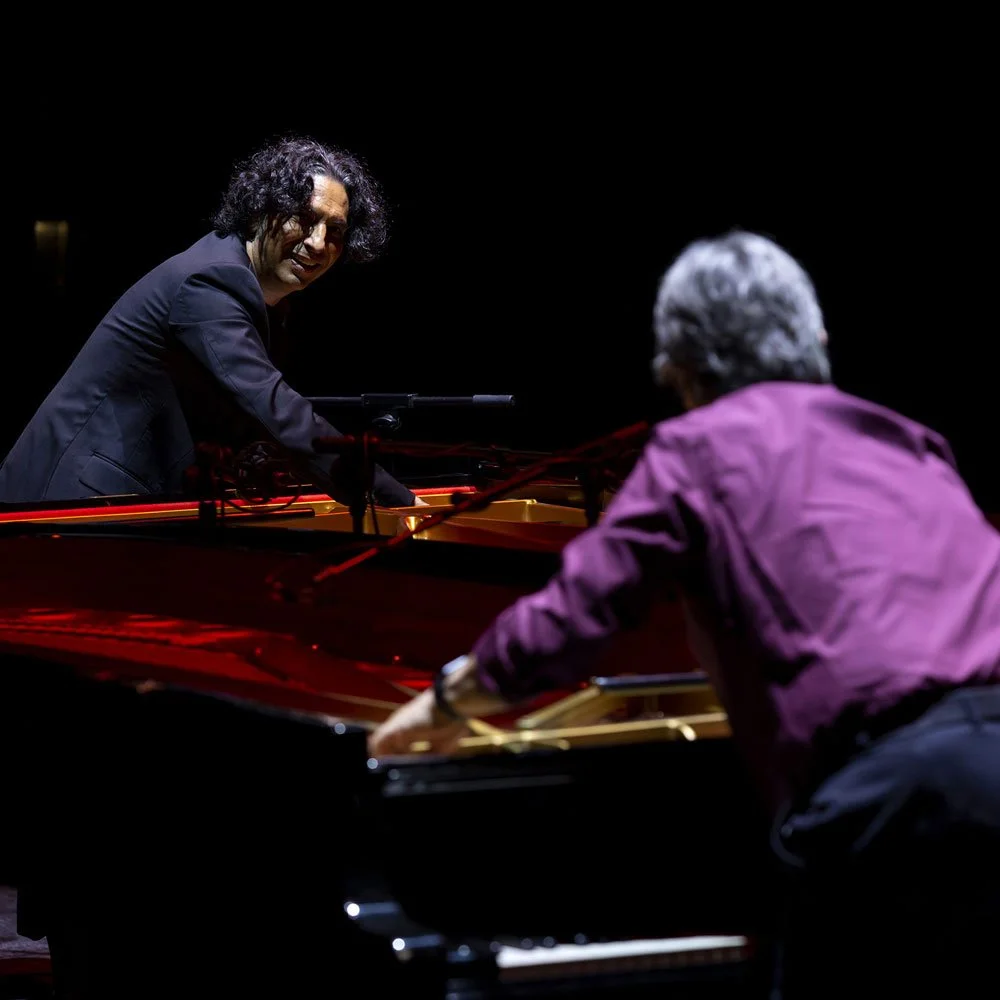
The piano has long occupied a nebulous relationship with flamenco. Going back to the 1700s, traditional flamenco instrumentation consisted primarily of a vocalist, a guitarist, a percussionist, and a dancer. It was not until the late 1940s that pioneers such as Arturo Pavón and Pepe Romero sought to bring the piano into the canon of flamenco music. Today, it is Chano Domínguez and Diego Amador who continue their quest for legitimization.
Much like flamenco music itself, Diego Amador is a native of Seville, Andalusia. He is a highly accomplished multi-instrumentalist and singer in his own right, despite being the younger half of the piano duo. Also called “El Ray Charles Gitano”, or “the Gypsy Ray Charles”, Diego has collaborated with some of the biggest names in both flamenco and jazz—Tomatito, Camarón de la Isla, Pat Metheny, and Chick Corea to name a few. As a child, he studied the flamenco guitar, training that permeates his work today through his pianistic styling. As a solo pianist, Diego is supremely expressive through both voice and keys. With the freedom of a rubato time-feel and a dancing right hand, he is able to convey his emotions through the piano extremely effectively. His melodic style is primarily influenced by flamenco melodic ornamentation, with hints of jazz and even gospel. An impressive performer all around, his touch is clean and articulate, contrasted beautifully by the rawness of his vocal inflections, influenced largely by the traditional Spanish phrasing of cante jondo.
Cádiz-born pianist Chano Domínguez forms the elder half of the flamenco-jazz duo. With 40 years of experience he has established himself as one of the greatest flamenco-jazz pianists in the world. As both a player and composer, Chano has collaborated with legendary flamenco guitarist Paco de Lucía, as well as jazz giants like Wynton Marsalis, and Herbie Hancock. He has received four Latin GRAMMY nominations, and has given masterclasses at the prestigious Juilliard School in New York City. As a solo pianist, Chano’s style contains musical multitudes. His playing evidences his genius as a composer—his interpretations and improvisations feel almost orchestral. He can range from tender jazz stylings with sonorous Bill Evans style block chords and a gentle rhythmic left hand, to a strong left hand and fiery right-hand melodic lines invoking jazz and bebop idioms as well as the expressive and ornamental melodies of flamenco. His touch is masterful, and his technical prowess appears effortless—however, most impressive is his internalization of time. Chano’s understanding of rhythm is tremendous; even without a percussionist to keep time, the audience can put their unequivocal faith in his hands, quite literally.
Together, their pianos function as instruments of both conversation and counterpoint. The two virtuosos are highly reactive, and can fluidly pass melodies back and forth, conversing through their shared language of flamenco-jazz. Their performance at Café Berlín in Madrid perfectly highlights their individual strengths through this musical dialogue. At times, the conversation feels like a meeting of old friends, reminiscing fondly of good times shared; at other times, the exchange feels like a friendly competition—two masters of their craft, each trying to one-up the other—with the only clear winner being the audience. As a duo they performed many flamenco classics, including Joaquín Rodrigo’s Concierto de Aranjuez for guitar (which Chick Corea famously used in his composition, Spain). Their mutual improvisations range from delicate and contemplative, to fiery and aggressive. Their style is exploratory, playful, creative, and intriguing. Their visible joy is positively infectious. You can see the elation on their faces as they interact and react to one another in the sonic landscape, poking and prodding each other with various musical references; each quote an invitation to explore a new and unexpected direction.
by Theo Bookey