

From Andalusia to New Orleans: The Crossroads of Sound
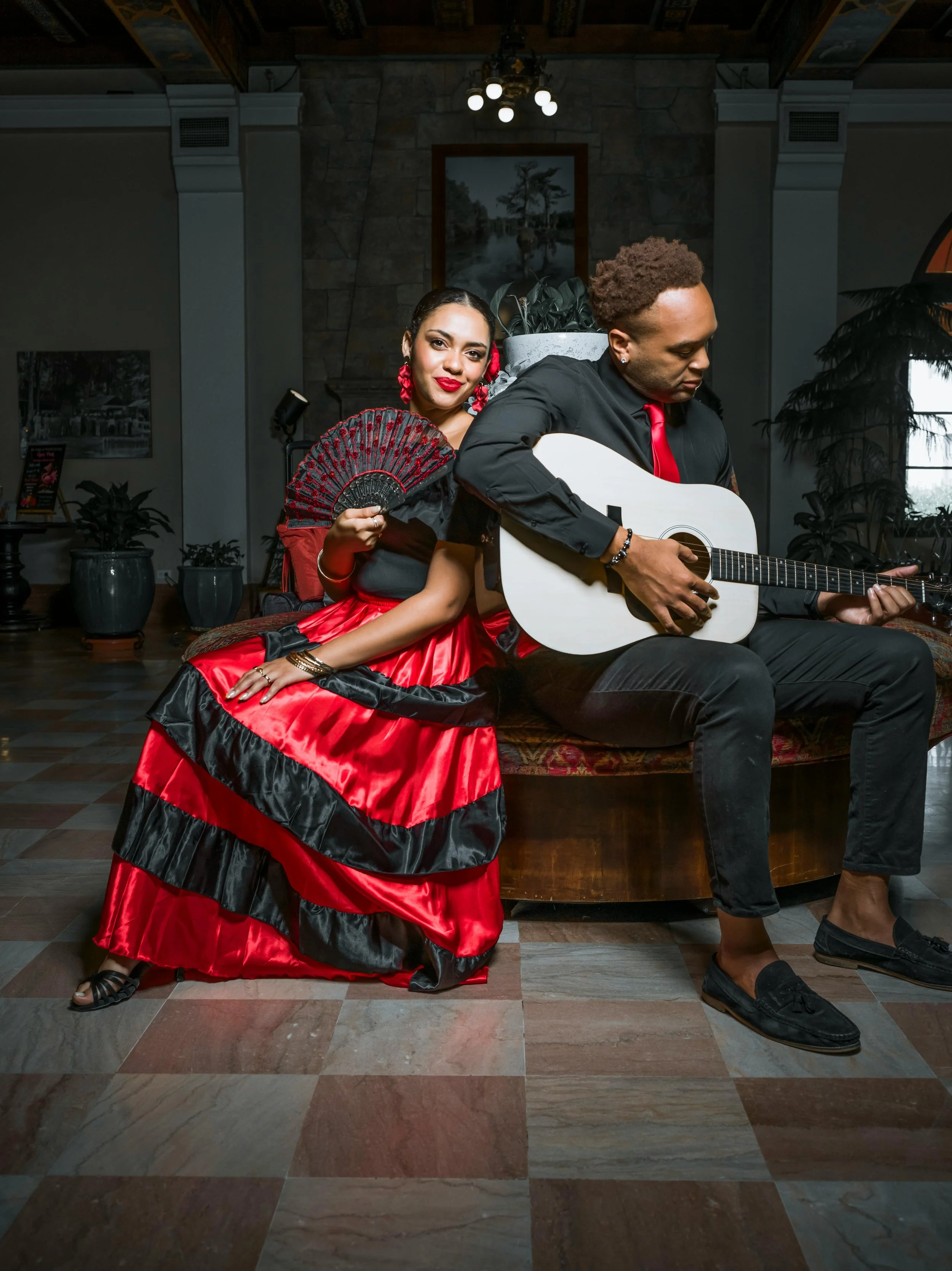
Throughout history, various musical genres have emerged and evolved as a result of interaction and fusion between different cultures. These blends enrich the musical traditions of peoples and generate unique styles that reflect diversity and evolution. Below, we’ll explore two emblematic examples: jazz, rooted in African migration and American culture, and flamenco, shaped by Arab, Jewish, gypsy, and African influences developed in southern Spain. We’ll also trace the paths forged by two key figures in this fusion process: Paco de Lucía and Chick Corea. Additionally, we’ll highlight pivotal moments involving the legendary Miles Davis, whose influence was crucial to the development of this musical convergence.
Jazz developed in the United States in the early 20th century, particularly in African American communities, especially in New Orleans. It emerged from a fusion of African musical traditions brought by enslaved people, with European rhythms and Caribbean melodies. This genre reflects a history of migration, resistance, and creativity among Afro-descendant communities in the U.S. Jazz is characterized by improvisation, syncopated rhythm, and emotional depth. Over time, it absorbed influences from other musical styles, expanding globally and transcending borders and cultures.
Flamenco has its roots in southern Spain, specifically in Andalusia, a region shaped by centuries of cultural exchange among Arabs, Jews, Gypsies, and African slaves. These communities coexisted and contributed to the creation of a genre that embodies a fusion of traditions. Flamenco includes singing (cante), guitar playing (toque), dancing (baile), and improvised singing styles. From the 1950s to the 1970s, flamenco experienced a period of introspection and a push for purity, in response to repression by the Franco regime, which from the late 1930s restricted cultural expressions. This process led to the consolidation of flamenco’s deep roots, preserving its identity and authenticity—standing in contrast to jazz, which during that same period experienced enormous growth and global reach.
In 1960, Miles Davis and Gil Evans brought Spain to jazz, creating one of the first fusions between these two genres. The album Sketches of Spain—their third collaboration—features works like “Concierto de Aranjuez” (composed by Joaquín Rodrigo) and “The Pan Piper.” This album is proof that these two musical styles were destined to unite, creating a fusion that deeply moves its listeners.
In the 1970s, these two worlds converged more profoundly, driven by visionary artists. Paco de Lucía became a central figure in the integration of jazz and flamenco. His virtuosic guitar playing and interest in experimenting with other genres opened new doors. One of de Lucía’s first exposures to jazz came in 1967, with the album Jazz Flamenco by saxophonist Pedro Iturralde, where elements of jazz were blended with flamenco guitar, marking a milestone in fusion history.
In 1976, following Franco’s death, de Lucía collaborated with jazz musicians like Al Di Meola and John McLaughlin on the album Elegant Gypsy, elevating his international recognition. These collaborations enabled flamenco to engage in dialogue with jazz, exploring new forms of improvisation and harmony. Paco de Lucía not only broke away from flamenco’s traditional constraints, but also learned to improvise freely, realizing that this technique enriched his musical expression and allowed him to explore new horizons.
Chick Corea, one of jazz’s most innovative artists, also ventured into Spanish and flamenco music. As early as 1972, with pieces like “Spain” from his album Light as a Feather, Corea demonstrated a deep interest in Spanish-rooted music. His interest wasn’t in repeating clichés, but in capturing the essence and cultural richness of flamenco and Spanish music as a whole. Pedro Ample recounts that Chick learned about Paco de Lucía before diving into flamenco. In the early 1970s, at the tablao Café de Chinitas, he met people who introduced him to Madrid’s scene and to Paco’s work—Corea even bought several of his records. Later, their 1982 collaboration on the album Touchstone further solidified the interaction between these styles.
Paco de Lucía also introduced unconventional instruments into flamenco guitar settings, such as the flute, through his collaboration with the talented Jorge Pardo, who had a notable impact on flamenco improvisation by incorporating jazz elements. Paco de Lucía’s continuous innovation and openness to other genres made him a modern flamenco icon and a bridge between different musical traditions.
Both jazz and flamenco share a magical quality in improvisation—that inexplicable impulse that drives musicians to do things on stage that defy logic. In flamenco, the concept of “duende” is hard to define. For some, it’s a state of grace, and for others, it’s a power that musicians access on stage, allowing them to feel the music instinctively, guided by heart rather than thought. It’s a gift—an ability to fill the stage and move the audience with raw talent and emotion. In jazz, improvisation lets musicians create melodies, harmonies, and rhythms on the spot, staying in tune with the piece while expressing what comes from the heart.
In Kind of Blue, Miles Davis gave musicians the freedom to improvise, and by using modal jazz, he broke through the harmonic progressions that often limit instrumentalists. The most legendary jazz album innovated the genre, surprising listeners with its emphasis on melody, atmosphere, and space for extended solos. In fact, Miles entered the studio with only sketches of the songs—the rest was up to the musicians and their creativity. The result was a masterpiece recorded in just two takes. It’s as if duende appeared twice at Columbia’s 30th Street studio in New York, working hand-in-hand with the talent and musical brilliance of the performers.
That’s why flamenco and jazz are genres destined to meet—because they both share that inexplicable magic that musicians find after years of deep immersion, creating artistic expressions that move those who live and breathe music.
Musical genres that emerge from cultural blends are a testament to a world in constant exchange. The histories of jazz and flamenco show how migration, cultural resistance, and historical movements are reflected in sounds that still enrich the global artistic landscape. The union of these styles not only represents innovation, but also opens a window to the diversity and richness of our shared cultural heritage.
by José Daniel Mejía Valle