

Step Into Flamenco Jazz! – Chapter One
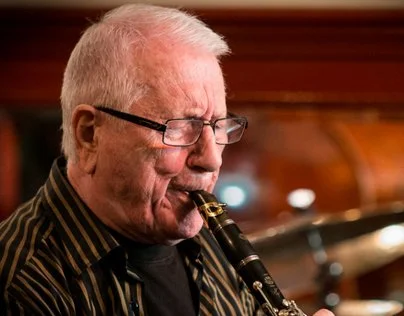
Flamenco Jazz represents the first — and perhaps the most fertile, rich, and meaningful — meeting ground between flamenco and jazz. It’s the most vibrant and thought-provoking blend in the history of both genres, and arguably the most significant expression of Spanish music in the last forty years. What’s more, it has spread beyond Spain, embraced by musicians around the world — proof of its truly universal dimension.
This extraordinary hybrid celebrates the powerful and natural union of two “music of the people,” whose deep roots, shared histories, and social parallels made their coming together all but inevitable. It’s only natural, then, that in the 21st century Flamenco Jazz has drawn growing intellectual attention and inspired books, essays, and analyses — all reflecting the creative energy that continues to shine through in performances, recordings, masterclasses, and tours.
The parallels between flamenco and jazz — historical, cultural, and human — naturally give rise to aesthetic and formal affinities. When these are explored with talent, something beautifully eclectic emerges. Its evolution has followed a familiar path:
early hints and precursors,
the first clear expressions,
consolidation and recognition, and finally
maturity and stability, once the phenomenon was accepted — and celebrated.
Yet defining Flamenco Jazz precisely, in technical or aesthetic terms, remains an elusive task. In fact, it’s easier to tell when a piece isn’t Flamenco Jazz than to pinpoint exactly when it is. The balance between its two elements — flamenco and jazz — varies widely: from artist to artist, record to record, even from song to song. And that’s just as it should be. If the mixture were perfectly even, it would lose its tension and surprise — the very things that make it exciting. This is, after all, an artistic marriage that formalized a secret but irresistible affair between two soulful lovers: the Black Soul and the Gypsy Duende — that mysterious, unteachable magic that lifts art beyond technique.
In each performance or composition, either Flamenco or Jazz may take the lead — in instrumentation, structure, or spirit. Sometimes a sense of balance arises, but never perfectly so, because, thankfully, music is not an exact science. In fact, Flamenco Jazz might best be understood through the idea of synergy: its results surpass the simple sum of its parts.
There is, undeniably, a Flamenco-Jazz hybrid — defined, above all, by the mutual enrichment of both traditions. The word mestizaje (crossbreeding) suits it better than fusion, a term more closely tied to Jazz-Rock experiments of the 1970s. Flamenco Jazz, by contrast, unfolds in many ways, from one genre flowing into the other, to intricate interconnections that may even incorporate touches of other styles — pop, bossa nova, and beyond. To truly appreciate it, each piece should be approached individually, savored on its own terms rather than through any rigid formula.
The great Jelly Roll Morton, one of jazz’s early pioneers (and notorious braggart, gambler, and self-proclaimed inventor of jazz), sensed this kinship a century ago when he said:
“If you can’t put a little Spanish tinge into your tunes, you’ll never have the right seasoning for jazz.”
Fittingly, the first tentative steps of Flamenco Jazz were taken by a Cuban saxophonist, “El Negro Aquilino,” alongside the great Spanish guitarist Sabicas in the 1930s. Later, in the 1950s, the idea was touched upon by four towering African-American musicians: Lionel Hampton, Charles Mingus, Miles Davis, and John Coltrane — a remarkable and telling coincidence.
But the genre truly found its footing in Spain in the late 1960s, thanks to another visionary — saxophonist Pedro Iturralde — who recorded with a young and then-unknown Andalusian guitarist: Paco de Lucía.
And that’s where our story really begins. An exciting story that I’ll unfold, chapter by chapter, in the months to come. Together, we’ll arrive at a beautiful truth: as long as they exist, Flamenco and Jazz will keep conversing, inspiring, and loving each other. They were born to meet — and to learn from one another.
Because Love, after all, never lies.
We’ll go together, talk about everyone, leave no one out.
See you soon!
—Carlos Aguilar (Originally in Spanish)